 Sv
Sv  En
En 
Share with


Blog
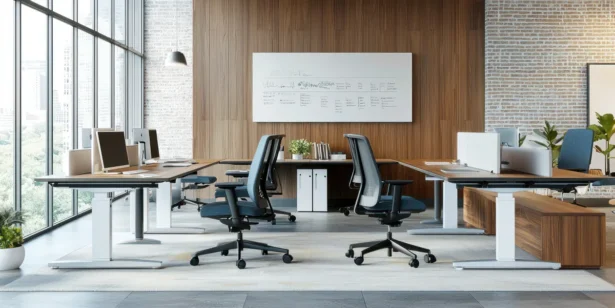
Office design affects movement mainly by making it easier to interrupt sitting and stand more often, not by automatically making people move more.
That distinction matters because many organisations still expect a new office layout to solve sedentary work patterns on its own.
An office can be more movement-supportive without producing much more actual movement.
A small natural experiment on an activity-permissive workplace makes that point clearly. After the move, employees stood more during the day, but they did not walk more in any meaningful way. That means the built environment can help, but it cannot replace behavioural logic, work routines, or organisational support.
What did the study actually show about a more movement-supportive office?
The study followed office workers who moved from a conventional workplace into a purpose-built environment designed to make movement easier. After the move, standing time increased during the workday and sitting time fell somewhat. Stepping time, however, did not increase in a meaningful way.
That is the most useful practical takeaway. Office design can influence how sedentary the workday becomes, but it should not be sold as proof that people will automatically move more.
For decision-makers, that matters because many workplace projects talk about health and activity benefits as if layout alone will deliver them. This study suggests the effect is narrower and more specific than that. The office can support less sitting, but it does not remove the need for a broader workplace strategy.
Why is the physical environment not enough on its own?
The researchers explicitly point toward the need for more than building design if organisations want stronger effects. Individual habits, social norms, and organisational practices still shape how people actually use the workplace.
That is why many office projects overestimate what the environment can do by itself. A better staircase, a more distributed plan, or a more visible set of movement opportunities may help, but those changes do not automatically reshape meetings, screen-heavy tasks, or expectations about how the day should be organised.
If the goal is less sedentary work in practice, design needs to be connected to behavioural expectations, workplace rules, and a realistic follow-up model. Otherwise the result is often a workplace that looks more active than it really is.
Which mistakes do organisations make when they want the office to support movement?
The first mistake is treating the office as a stand-alone intervention. That replaces analysis with optimism.
The second mistake is confusing standing with broader physical activity. Standing more can still be valuable, but it is not the same thing as creating a more active workday. If the goal is movement, that needs to be defined much more precisely.
The third mistake is evaluating the project too loosely. If follow-up only asks whether the workplace feels modern or attractive, the organisation misses the question of whether work patterns have actually changed in a useful way.
How should organisations make better decisions about movement-supportive offices?
First, they need to define which outcome actually matters. Is the aim to reduce prolonged sitting, support more frequent standing, improve workplace health, or change everyday movement patterns more broadly? Those are related but different goals, and they should not be driven by identical design choices.
Second, the organisation needs to understand which parts of the workday are realistically influenced by the environment. If the work remains highly screen-based and meeting-heavy, then leadership, routines, and work pattern design may matter just as much as layout.
Third, follow-up needs to be built in from the start. Workplace analysis makes office design more useful when it is connected to actual workplace goals, expected behaviour, and a decision base for adjustment.
This is close to applied workplace strategy work within WeOffice. The real decision is not only what the office should look like. It is what the environment should support in practice and how that support should be evaluated.
Which questions should you answer before investing in a more movement-supportive office?
At a minimum, the organisation should be able to answer the following:
- Is the goal to reduce sitting, increase standing, or create more overall movement during the workday?
- Which parts of everyday work can realistically be influenced through the physical environment?
- Which norms, routines, or meeting habits may undermine the intended design effect?
- How will you evaluate whether the workplace is actually supporting healthier and more usable work patterns over time?
If those questions remain unclear, the design decision is likely to become symbolic rather than strategic.
Next step
Turn movement-supportive office design into a better decision base
If your team needs a clearer decision base for how office design, work patterns, and workplace health fit together, Workplace analysis tools is the most direct next step. That is where workplace signals become more structured and usable in real office decisions.
If the issue also needs to be connected to wider workplace change, Consultancy Services, The Workplace Adequacy™ Framework, and About Us are the strongest supporting links.
Source
Source supporting this article: PLOS ONE, “Does an ‘Activity-Permissive’ Workplace Change Office Workers’ Sitting and Activity Time?”, published 2013-10-02. URL: https://doi.org/10.1371/journal.pone.0076723.
FAQ
Can office design really reduce sedentary work?
Yes. The study suggests that office design can reduce sedentary time by making it easier for people to stand more during the day. But it does not show that design alone creates more movement in a broader sense. That is why the effect needs to be defined carefully.
Is standing the same thing as more physical activity?
No. Standing more is not the same as walking more or becoming more active overall. In the study, standing increased, but stepping time did not change meaningfully. Organisations should avoid treating those outcomes as interchangeable.
Why does a new office not automatically change behaviour?
Because behaviour is also shaped by work routines, social expectations, task structure, and leadership. The workplace can support change, but it cannot deliver it alone. That is why design decisions need a wider implementation logic.
How should a movement-supportive office be evaluated?
It should be evaluated against the actual goal of the project. If the goal was less prolonged sitting, that should be measured. If the goal was wider workplace health or more movement, the organisation needs a broader follow-up model. A loose satisfaction check is usually too weak.
When is WeOffice relevant in this type of decision?
WeOffice is relevant when the organisation needs a stronger decision base before redesign, relocation, or workplace adjustment. That is especially true when the built environment needs to be connected to workplace analysis, strategy, and practical next actions rather than treated as a stand-alone design question.