 Sv
Sv  En
En 
Share with


Blog
JLL’s global guide to office fit-out costs describes a market where cost pressure has not disappeared, even if conditions have stabilised somewhat. The most important lesson for project sponsors is that the budget is shaped early, long before finishes and material selections are fully drawn.
Costs are no longer spiralling, but they are not simple either
JLL describes a market where global fit-out costs have increased by roughly 2 to 6 percent over the past year. That is not the same shock pattern seen during the most turbulent years, but uncertainty remains a clear planning factor. Material pricing has stabilised in some regions and inflation has eased, yet that does not make projects straightforward again.
The useful insight in the report is that uncertainty now has to be treated as part of budget control itself. Geopolitics, energy costs, labour shortages, and more complex technology stacks all affect projects in ways that make old cost assumptions less reliable. For clients and project teams, that means an office project cannot be budgeted as if every cost driver were linear or fully controllable.
Typology is a strategic decision, not just a design preference
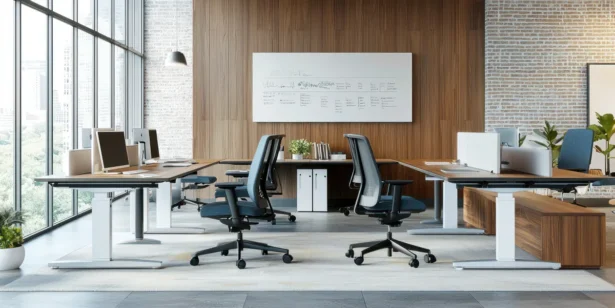
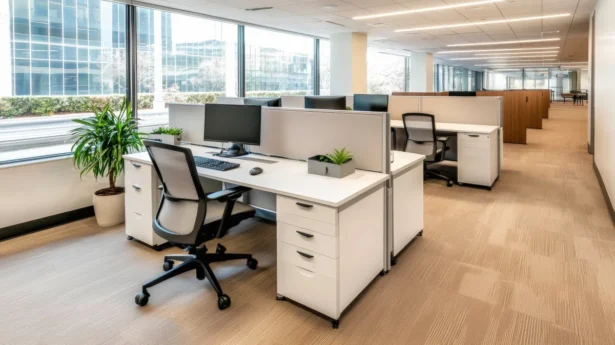
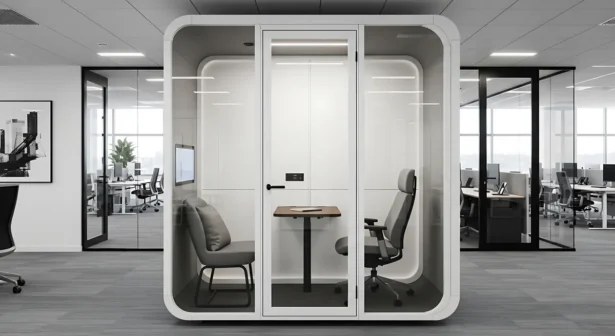
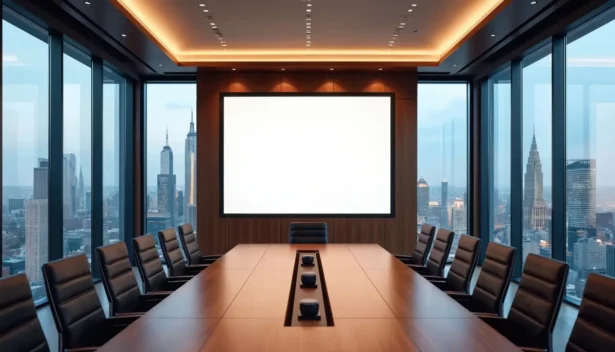
One of the clearest points in the report is that the right office typology has to be defined early. JLL shows that fit-out costs can vary by 10 to 30 percent between different typologies and specification levels. That is a large spread, and it means the wrong starting assumption can distort the entire investment case.
This matters even more at a time when many organisations want the office to deliver more: better collaboration, stronger culture, better learning environments, improved client experience, and a more intentional reason to come together. In that context, it is easy to jump straight to look and feel. The report points in the opposite direction: define which workplace model and office size are actually needed before the fit-out is defined first and be clear about which behaviours the space is meant to support.
An office designed mainly for focused work and low change intensity does not need the same technical or spatial profile as an office intended to act as a collaboration hub, meeting place, and platform for learning. If the typology is unclear at the start, the project usually becomes both more expensive and less precise.
Energy affects more than operating cost
The report highlights energy as a growing factor in fit-out decisions. That includes not only the building’s future operation but also pricing for materials and for mechanical and electrical systems. For decision-makers, this means energy cannot be treated as a separate stream.
In practice, the energy lens needs to influence system levels, installation scope, material choices, and ambition level. It may also change how refurbishment depth and material replacement affect carbon impact and which trade-offs make sense between function, carbon performance, and capital cost. When energy costs affect several layers of the project, optimising one line item at a time is not enough. The technical and functional logic of the whole project has to be questioned.
That is especially relevant in markets where expectations are already high. The gap between a well-calibrated project and an over-engineered one can become large very quickly.
AI readiness turns technology into a bigger budget issue
JLL describes technology as one of the most complex parts of modern office fit-outs. AI readiness is mentioned as a growing factor, together with deeper systems integration and higher pressure on technical infrastructure. This does not mean every office needs to be built around a specific AI platform. It means the technical environment is becoming more interconnected, more capacity-intensive, and more expensive to integrate.
That has a direct impact on workplace strategy. If an organisation wants to work in a more data-enabled way, strengthen hybrid collaboration, or rely more on digital support, the technical ambition level has to be defined early. Otherwise, technology decisions are pushed too far downstream and start inflating costs at the wrong stage.
It is also a reminder that future-proofing has to be selective. Not everything needs to be built to the highest level, but the right capabilities need to be scalable over time.
What project sponsors should do differently
The most useful lesson in the report is that fit-out cost control is not mainly created through late procurement tactics. It is created through better early-stage decisions.
That includes:
- defining the function and typology of the workplace before the design becomes too detailed
- linking technology ambition to actual business value
- assessing how energy affects both systems and materials
- working with realistic cost ranges instead of a single budget number
For many organisations, this is a shift. Office projects are often managed as a mix of location issue, design issue, and construction issue. JLL’s guide shows that fit-out should instead be treated as a strategic investment issue where workplace model, business requirements, technology, and economics are joined from the start.
Better questions create better projects
When cost conditions are uncertain, the temptation is to delay difficult decisions. But the report points in the other direction: the need for more precision early. It is better to decide what office is actually needed than to start with an unclear concept and try to cut cost later.
That is especially true for organisations that see the office as a tool for performance, culture, and change. In those cases, the budget has to be built around the intended function, not around a generic specification. That work becomes stronger when decisions rest on clear workplace analysis and a grounded workplace strategy.
JLL’s guide does not describe a market in crisis, but it does describe a market where complexity has become normal. For office projects, that means typology, energy, and technology are not side issues. They are core budget issues. The teams that address them early will have more control over both the investment and the final outcome.
Source: JLL Research, Global office fit-out costs guide 2026, published 2026-04-16.
Next step
Need a clearer next step?
If you are moving ahead with a refurbishment, relocation, or fit-out, WeOffice can lead the office change project from early decision support through budget control, scope definition, and delivery, and develop interior design concepts that unite function and identity.
FAQ
What drives office fit-out cost the most?
The largest cost drivers are usually set early: office typology, technology ambition, energy requirements, and refurbishment depth. That is why budget control depends more on early choices than on late cost cutting.
Why is it risky to leave budget decisions until later?
If typology, technical scope, and refurbishment level stay unclear, the project becomes reactive. That typically leads to late additions, weaker prioritisation, and a budget that is less connected to business value.
How can project sponsors gain earlier budget control?
The better route is to compare scenarios for workplace model, technology, energy, and scope before detailed design is locked. That makes it easier to choose the right investment level for the actual need.